
Inyo Projected vs Actual Release
A projected release date is a calculated or scheduled date. An actual release date is the date custody truly ends or changes. The two can differ. Court orders, sentence credits, amended judgments, detainers, discipline, parole review, and agency processing can move the final date. Inyo County Jail release timing is also different from a CDCR state-prison release, because the jail handles local custody while CDCR calculates state prison sentences from court documents.
Scheduled is not final. A projected release date gives a working date for a sentenced case. It does not guarantee release to the community, and it may change before the person leaves custody.
For pretrial custody at Inyo County Jail, a date may not exist at all. The next event may be bail, own-recognizance release, dismissal, a court order, a plea, sentencing, transfer to CDCR, or transfer to another agency. The Inyo Superior Court record explains those case events better than a roster listing.
Find Inyo Projected Release Date
The first step is to decide whether the person is in county jail, state prison, federal custody, or another agency path. Many release-date searches fail because the person moved out of Inyo County Jail and into CDCR, or because a local booking ended while a court case continued.
- Check the Inyo Sheriff Citizen RIMS incarcerated-people page for current county custody or recent booking information.
- For a county-jail sentence, contact Inyo County Jail or review the Inyo Superior Court sentencing and custody-credit record.
- For a state-prison sentence, search CDCR CIRIS by name or CDCR number.
- Use the Inyo Superior Court record if the only known fact is an Inyo arrest or case number.
- Use California VINE for custody-change alerts, then verify the release reason through the jail, court, or CDCR record.
When the goal is a full released-person lookup rather than a date calculation, use the broader records path on the Inyo County released inmates home page. It separates county jail releases from CDCR, BOP, ICE, court records, and public-records requests.
CDCR Dates for Inyo Cases
California's state-prison release-date language is not limited to one label. CDCR and the Board of Parole Hearings use terms such as EPRD, MEPD, NPED, YPED, EPED, and controlling parole eligible date. EPRD means Earliest Possible Release Date for determinate-term offenders after the court sentence and applicable credits are applied. MEPD means Minimum Eligible Parole Date for life-with-parole cases. NPED, YPED, and EPED relate to nonviolent, youth, and elderly parole frameworks.
For a determinate CDCR sentence from Inyo County, EPRD may be closest to the everyday idea of a projected release date. For a life sentence, an eligible parole date opens the chance for parole consideration. It does not by itself release the person. A grant of parole can also be subject to legal and gubernatorial review before becoming final.
| Date Label | How to Read It |
|---|---|
| EPRD | Earliest possible release date for many determinate-term CDCR cases after credits. |
| MEPD | Minimum eligible parole date for life-with-possibility-of-parole cases. |
| NPED | Nonviolent parole eligible date described by BPH for qualifying cases. |
| YPED | Youth parole eligible date framework. |
| EPED | Elderly parole eligible date framework. |
| Controlling date | The earliest applicable opportunity for parole consideration or release when more than one date applies. |
California Good-Time Rules
CDCR applies applicable credits and calculates sentences from court documents. Its release-process information says a person receives a new calculation after resentencing unless there is a sentencing discrepancy, and discrepancies can be referred back to the sentencing court. Release dates can change because of amended court orders, sentencing discrepancies, detainers, OMHD or SVP reviews, disciplinary credits, program credits, statutory changes, or recalculation under state or federal rules.
California's violent-felony credit cap is Penal Code section 2933.1. It limits worktime credit to no more than 15 percent for people convicted of violent felonies listed in section 667.5(c), and it also applies to specified local presentence custody credit. In plain terms, that is the common "about 85 percent" rule for covered violent felony terms.
County-jail credits are different. Penal Code section 4019 is commonly involved in local custody conduct credits, but the formula can depend on offense date, conviction offense, prior exclusions, sentencing order, jail discipline, amended orders, and statutory changes. The Inyo jail page does not publish a local good-time policy, release-time policy, or weekend-release rule, so a universal calculator would be unreliable.
For Inyo County Jail, the court minute order and custody-credit award are central. The jail may know the custody date it is working from, but the court record explains the sentence, credits already awarded, and whether a later order changed the calculation. If the person is awaiting trial, the same credit rules do not create a fixed release date because custody may end through bail, a court order, dismissal, or transfer before any local sentence is imposed.
The California Penal Code source for local custody credits is shown below. Use it as a legal source, not as a substitute for the sentencing minute order or jail records.
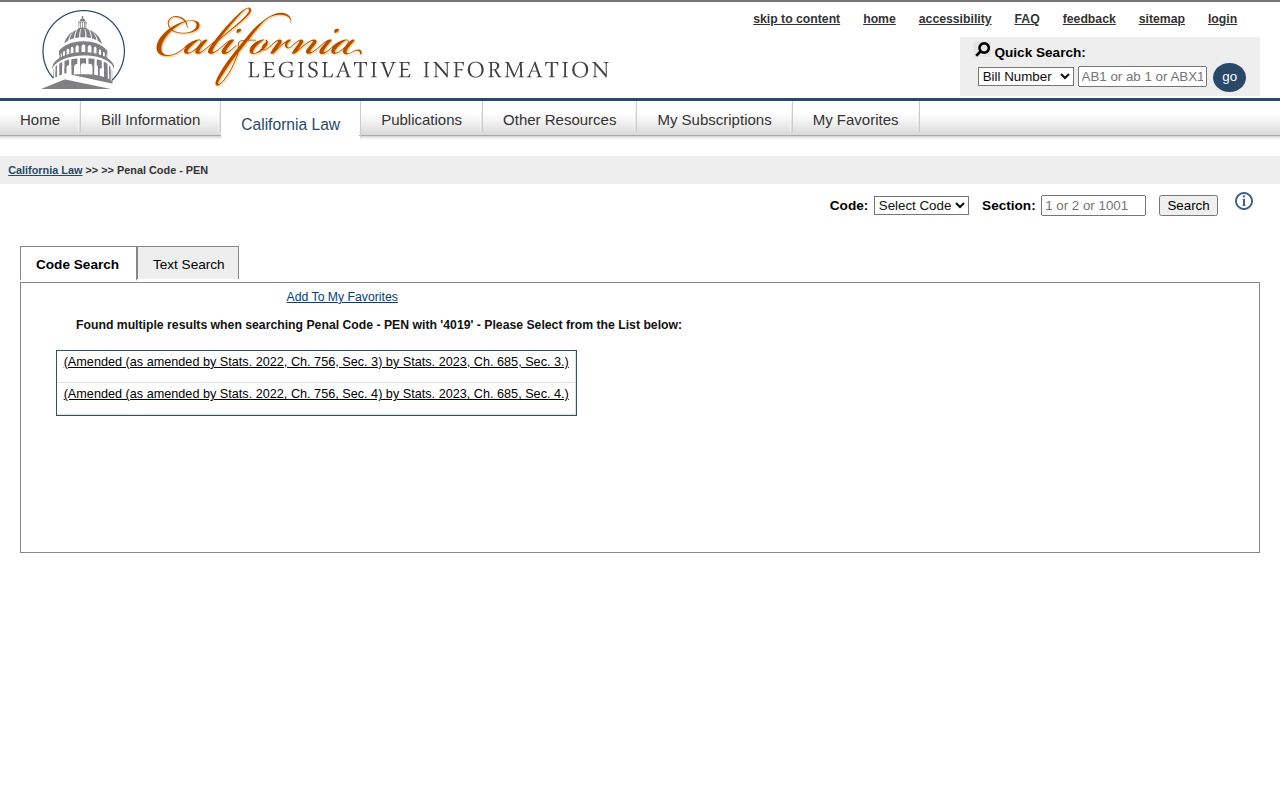
For a real Inyo County jail date, confirm the sentence, credits, and holds with the jail or court record.
Inyo Jail Date Limits
The Inyo County Jail page lists the jail as open 24 hours a day, seven days per week, but it does not publish a general release-time policy, weekend-release rule, or public release lobby process. That means local projected date questions should be handled as case-specific records questions. A person may be eligible for local release on one date yet still have a court hold, another agency hold, transport issue, or paperwork step that affects the actual release event.
For a county sentence, ask for the sentence, custody credits, any holds, and the public time and manner of release if the person has already left custody. For a pending court case, ask the Inyo Superior Court for the docket, minute order, disposition, or sentencing record. The court record may show time served, probation, bail status, dismissal, prison commitment, or a bench warrant that explains why the jail date changed.
Inyo's geography makes this practical. The jail is in Independence, while many release follow-up tasks may involve Bishop, CDCR, another county, or a state or federal system. Confirming the date by phone or record request before travel can prevent a long trip based on a date that has changed.
Why Inyo Release Dates Change
A projected date is only as stable as the sentence, credits, holds, and agency processing behind it. A person may be eligible to leave one custody system but still be transferred to another. CDCR release processing also includes checks for other cases, detainers, parole or PRCS assignment, notices, release funds, court documents, and specialized reviews where applicable.
| Change Factor | Effect on Release Date |
|---|---|
| Court amended order | Can shorten, lengthen, or recalculate a term when the court changes the sentence. |
| Credit calculation | Good-time, conduct, program, or presentence credits can move the calculated date. |
| Disciplinary credit loss | Can delay release if credits are reduced under applicable rules. |
| Detainer or hold | Can cause transfer to another agency instead of release to the community. |
| Parole review | Can delay actual release when parole suitability must be granted and reviewed. |
| Federal or ICE custody | Can move the person out of county or state release channels into another system. |
Note: Roster absence is not the same as a confirmed Inyo County release date; it may reflect transfer, data-window changes, or another custody route.
Detainers are especially important. CDCR release-process information says law-enforcement detainers can supersede a release order. In practice, a person may leave CDCR or the Inyo jail but be turned over to another agency rather than released to the community. For users trying to plan pickup or confirm status, the receiving agency matters as much as the scheduled date.
Confirm Inyo Release Date
Confirmation depends on the source of custody. For Inyo County Jail, use the jail, Sheriff's records/public-records route, and Inyo Superior Court sentencing or disposition records. For CDCR custody, use CIRIS and CDCR or BPH sources. For a pending custody change, register through the Inyo County VINELink inmate check path and then verify the legal reason through the record source.
The Inyo court record can show sentence, custody credits, probation terms, prison commitment, dismissed counts, bench warrants, bail status, minute orders, and an abstract of judgment when applicable. The court records-search process is request-centered rather than a broad public criminal portal. That makes written or in-person court records important when an online date does not explain what happened.
If a formal record is needed, request identifiable booking and release information through the Sheriff's records or county public-records process, and request docket or disposition records through the court. Keep the request narrow: name, booking date if known, case number if known, and the specific release-date or custody-credit question. A targeted request is more useful than asking an agency to interpret the whole case from scratch.